How We Remodeled This Atlanta Kitchen for Under $10,000
A dated Atlanta kitchen refreshed by keeping the layout, refinishing the cabinets, and replacing the surfaces and fixtures that mattered most. Here is how the project came together.
A full gut renovation can easily run $30,000 to $60,000 or more in Atlanta. But not every tired kitchen needs to be torn out to the studs. The project in this article is the other kind of remodel: keep the layout, keep the cabinet boxes, and replace the finishes that change how the room looks and works. The goal was to bring an older Atlanta kitchen back to life for under $10,000.
This is a real project, documented from start to finish. The photos below show the same kitchen before, during, and after the work. Nothing here is staged, and no stock imagery was used.
We did not move a single wall, sink, or appliance. That single decision is what kept the project under $10,000.
The Starting Point
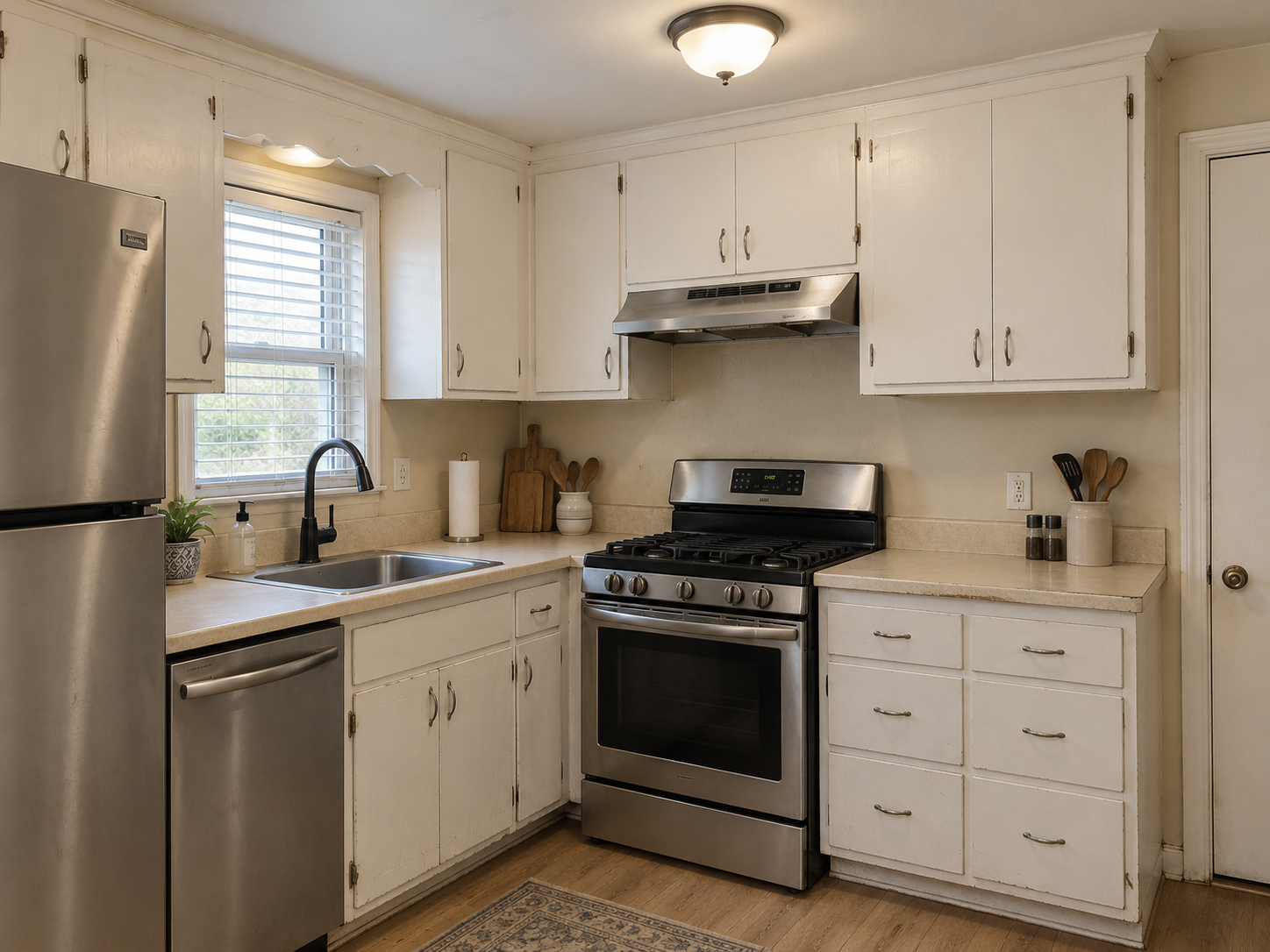
The kitchen before any work began. Original white cabinets, worn laminate counters, and a flat 4-inch laminate backsplash.
The kitchen was a compact L-shape with a window over the sink. The bones were good: the layout worked, the cabinets were structurally sound, and the appliances, including the refrigerator, dishwasher, and gas range, were staying. What the room suffered from was finishes. Worn beige laminate counters with a matching laminate backsplash, tired cabinet doors, and a generally dated look added up to a space that felt older than it was.
The temptation in a kitchen like this is to start over. New cabinets, new layout, maybe knock out a wall. Each of those choices adds trades, permits, and weeks of work, and each one pushes the budget into a different category. The first decision on this project was to leave the footprint alone.
The Plan: What We Changed, What We Kept
With the layout off the table, the budget could go where it would be seen and felt every day. The plan came down to five focused updates:
Refinish the existing cabinet boxes and doors in a deep charcoal grey.
Replace the laminate counters with a light, stone-look surface.
Install a new tile backsplash from counter to cabinet.
Swap the cabinet hardware for matte black pulls.
Replace the sink faucet with a modern matte black fixture.
Everything else, the appliances, the floor, the window, the doors, stayed. When you are not moving plumbing, electrical, or gas, and you are not buying new cabinets, the budget stretches a long way across surfaces and fixtures. For help thinking through your own scope, see our Atlanta kitchen remodeling overview.
Cabinet Refinishing
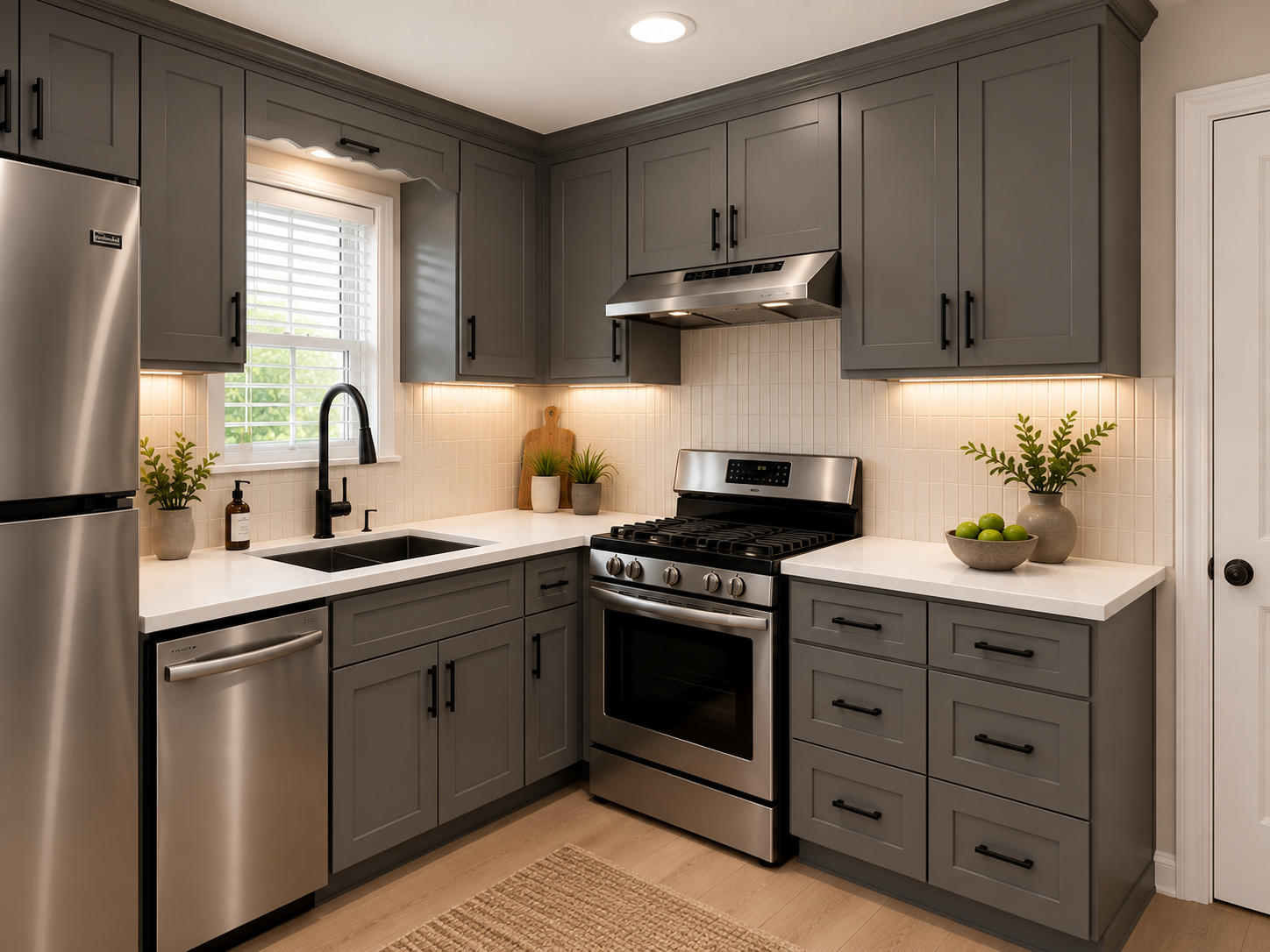
Refinished cabinet boxes and doors in a deep charcoal grey, fitted with matte black bar pulls.
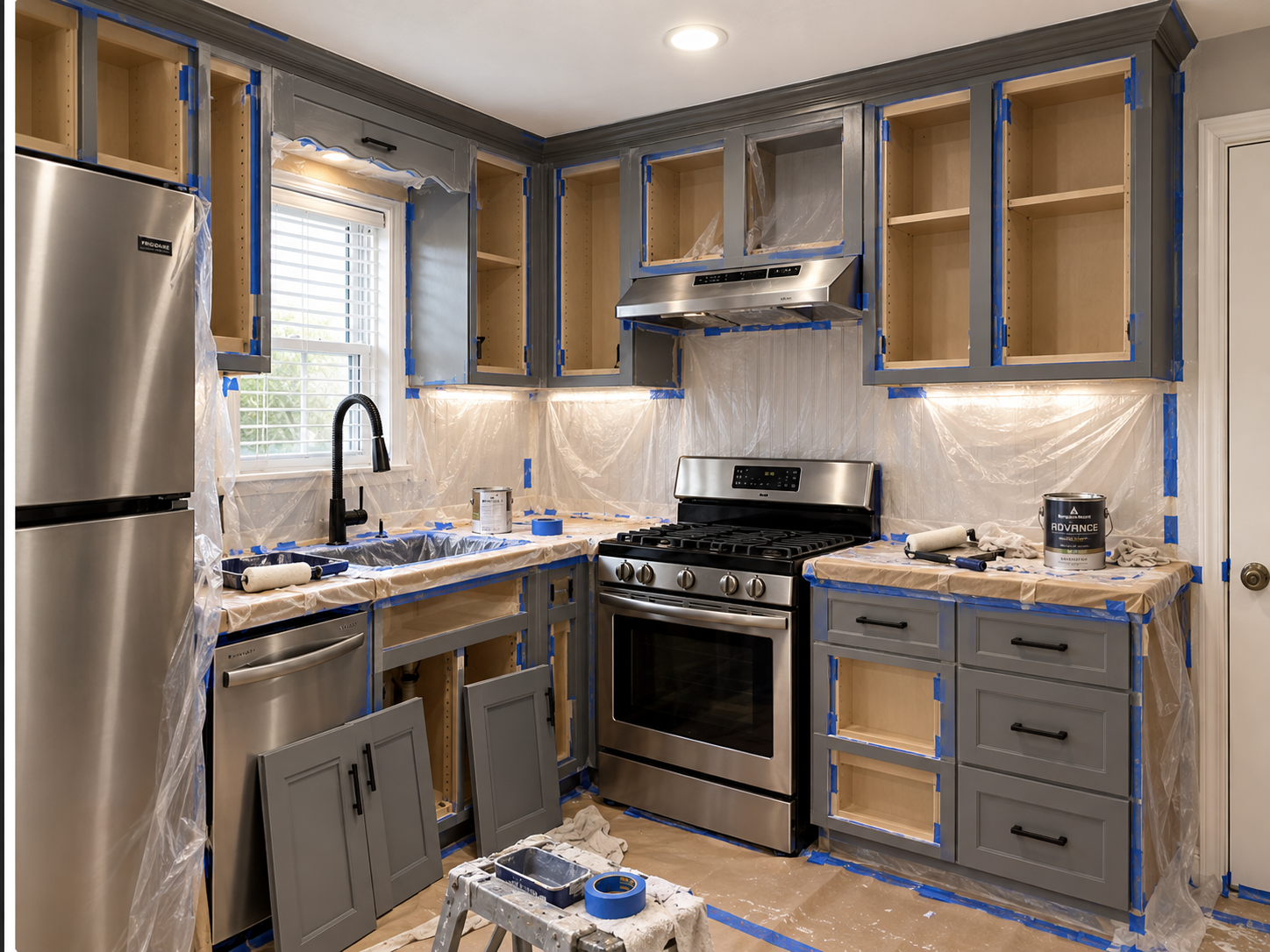
The single biggest visual change in the room came from the cabinets. Instead of replacing the boxes, the existing cabinets were prepped, primed, and painted in a cool-toned charcoal grey. The doors and drawer fronts were removed, painted separately, and rehung. New matte black bar pulls replaced the old silver hardware.
Cabinet refinishing is one of the highest-impact things you can do in a kitchen on a budget. It keeps the cabinet boxes, the hinges, and the layout exactly where they are, and it changes the entire color story of the room. Done right, with proper cleaning, sanding, a bonding primer, and a durable cabinet-grade finish like the Benjamin Moore Advance used here, the result reads as a new kitchen rather than a painted-over old one. If your doors are flat-front or shaker style and the boxes are solid, this is usually the first lever we pull.
This kind of finish work falls squarely in the painting and carpentry scope we handle day to day across Atlanta.
Countertop Replacement
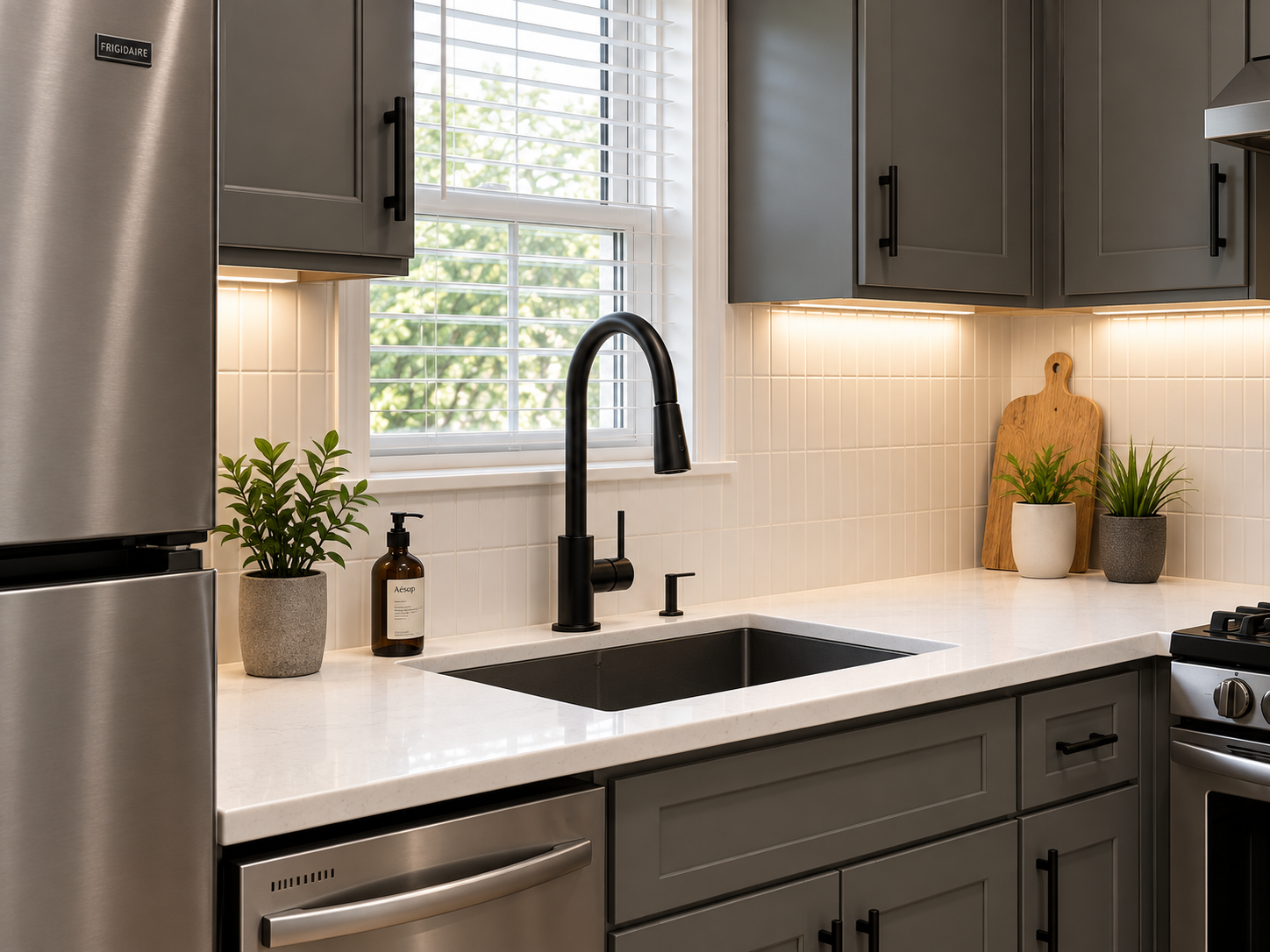
New light stone-look counters with subtle grey veining, an undermount sink, and a matte black faucet.
The old laminate counters and their matching 4-inch backsplash strip were removed and replaced with a light stone-look surface carrying a faint grey veining. The undermount sink was re-set against the new counter, and the old faucet was swapped for a high-arc matte black pull-down model.
Counters are the surface you see and touch most in a kitchen, so they carry more weight in how the room reads than almost anything else. Laminate is functional, but it dates a kitchen fast, and the matching backsplash strip is one of the clearest tells that a kitchen is from another era. Replacing just the counters, while keeping the sink and appliances in place, is a focused upgrade that changes the whole impression of the space without touching the layout.
Backsplash Installation
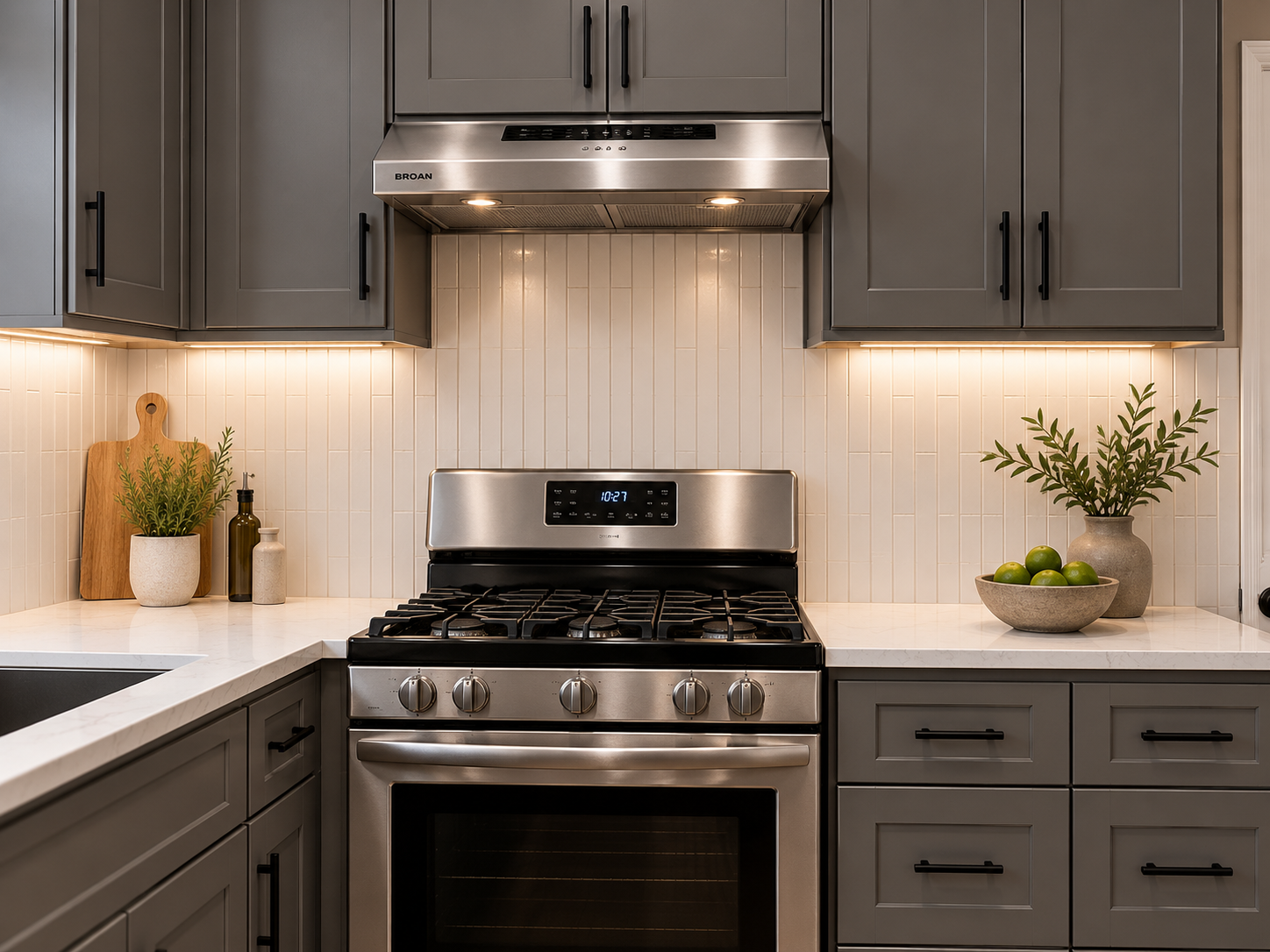
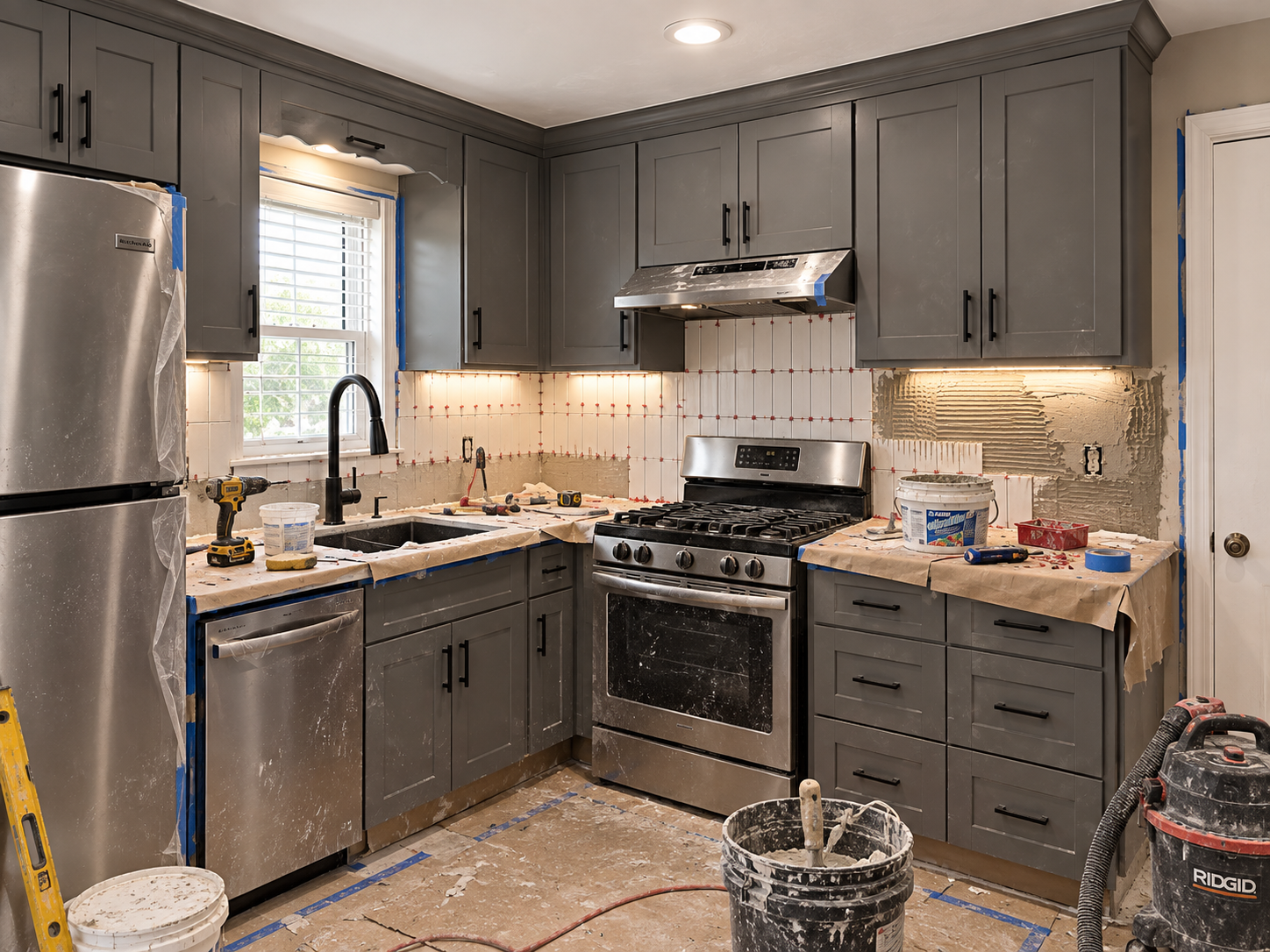
Backsplash in progress: vertical subway tile going up over thin-set, with spacers keeping the lines true.
With the laminate backsplash strip gone, the wall from the counter to the upper cabinets was open for a real tile install. A slim vertical subway tile was set over thin-set, with spacers holding consistent joints and a level keeping the courses straight. The warm under-cabinet lighting was reconnected so the finished tile would read cleanly at night as well as during the day.
A tile backsplash is one of the few finishes in a kitchen that is both decorative and practical: it protects the wall behind the counter and sink, and it gives you a chance to add a material and a line that tie the whole room together. Keeping the tile run between the existing cabinets and the new counters meant no wall repair above the counter and a clean, contained installation.
Hardware
Cabinet doors removed for refinishing, each fitted with new matte black bar pulls before rehanging.
The old silver-toned pulls were replaced with simple matte black bar pulls. Hardware is a small detail with an outsized effect. On dark cabinets, a black pull reads almost as a shadow line and lets the door color lead. Against a lighter door, the same pull would be the first thing your eye lands on. The choice here was to let the charcoal grey do the talking and keep the hardware quiet.
Swapping hardware is also the least expensive line item in a refresh like this, and it is one of the easiest things to get right. Pick a finish, pick a pull length that fits the drawer, and stay consistent across every door. Inconsistent hardware is one of the small things that makes a kitchen feel unfinished even when everything else is done.
Sink and Faucet
The undermount sink was kept and re-set against the new counter, and the old faucet was replaced with a high-arc matte black pull-down faucet. Coordinating the faucet finish with the cabinet hardware gave the room one consistent metal story: matte black at the cabinets, matte black at the sink, stainless at the appliances. Reusing the existing sink kept the plumbing in place and held the budget down.
The Design Strategy Behind the Budget
Keeping a kitchen remodel under $10,000 is less about finding cheap materials and more about choosing where not to spend. On this project the strategy was simple: spend on the surfaces you see and touch every day, and do not spend on anything behind a wall or under a floor that did not need to move.
Charcoal cabinets
#4A4D4E
Light counter
Stone-look, subtle veining
Vertical subway tile
Warm off-white
Matte black metal
Hardware and faucet
The palette is deliberately restrained: one dark tone for the cabinets, one light tone for the counters and tile, and one metal finish used in exactly two places. A tight palette like this reads as intentional and current, and because there are only a few finishes to source, it also keeps the shopping list, and the budget, under control.
Before, During, and After
The three photos below show the same kitchen at three points: before any work started, during the backsplash and cabinet refinishing phase, and after the last pull was rehung.
BeforeDuringAfter
What Made the Budget Possible
Most kitchen budgets get away from homeowners in the parts that are not visible, not the parts that are. Moving a sink means replumbing the wall. Moving a range means running a new gas line. Opening a wall means structure, permits, and drywall repair on both sides. Each of those is a separate trade and a separate line item.
On this project, every one of those was off the table by design. The layout stayed. The appliances stayed. The sink stayed. The floor stayed. The budget went into the surfaces and fixtures the homeowner actually sees and uses, and it went far enough to make the room feel new.
That is the difference between an affordable kitchen remodel in Atlanta and a full renovation. It is not lesser work. It is a different scope, chosen on purpose.
A surface-level refresh like this is the right call when the layout already works and the cabinet boxes are in good shape. It is not the right call if the kitchen needs new plumbing runs, a new electrical circuit, structural changes, or a full cabinet replacement. Those projects are a different category of work and a different budget, and being honest about that up front is part of scoping a kitchen correctly. If your project needs trades or permits, we will tell you before any work starts. See our general home repair and electrical pages for the kinds of work we handle alongside remodels.
The Takeaway
An outdated kitchen does not always need to be torn out. When the layout works and the cabinets are sound, refinishing the cabinets, replacing the counters, installing a real tile backsplash, and updating the hardware and faucet can deliver a kitchen that feels completely new for a fraction of a gut renovation. The project in this article came in under $10,000 because it was scoped to spend on the surfaces that matter and to leave everything else exactly where it was.
If you are weighing the same choice for your own kitchen, the most useful first step is a clear-eyed look at what should be replaced, what can be preserved, and where your renovation dollars will make the biggest difference. That is the conversation we start with every homeowner we work with in Atlanta. Request a kitchen remodel estimate to get started.
Atlanta Remodeling Guide · Case Study
Thinking About Updating Your Atlanta Kitchen?
If your kitchen feels dated but you are not interested in spending $30,000 to $60,000 on a complete gut renovation, there may be another option. Atlanta Handyman Company helps homeowners throughout Metro Atlanta evaluate what should be replaced, what can be preserved, and where their renovation dollars will make the biggest difference.