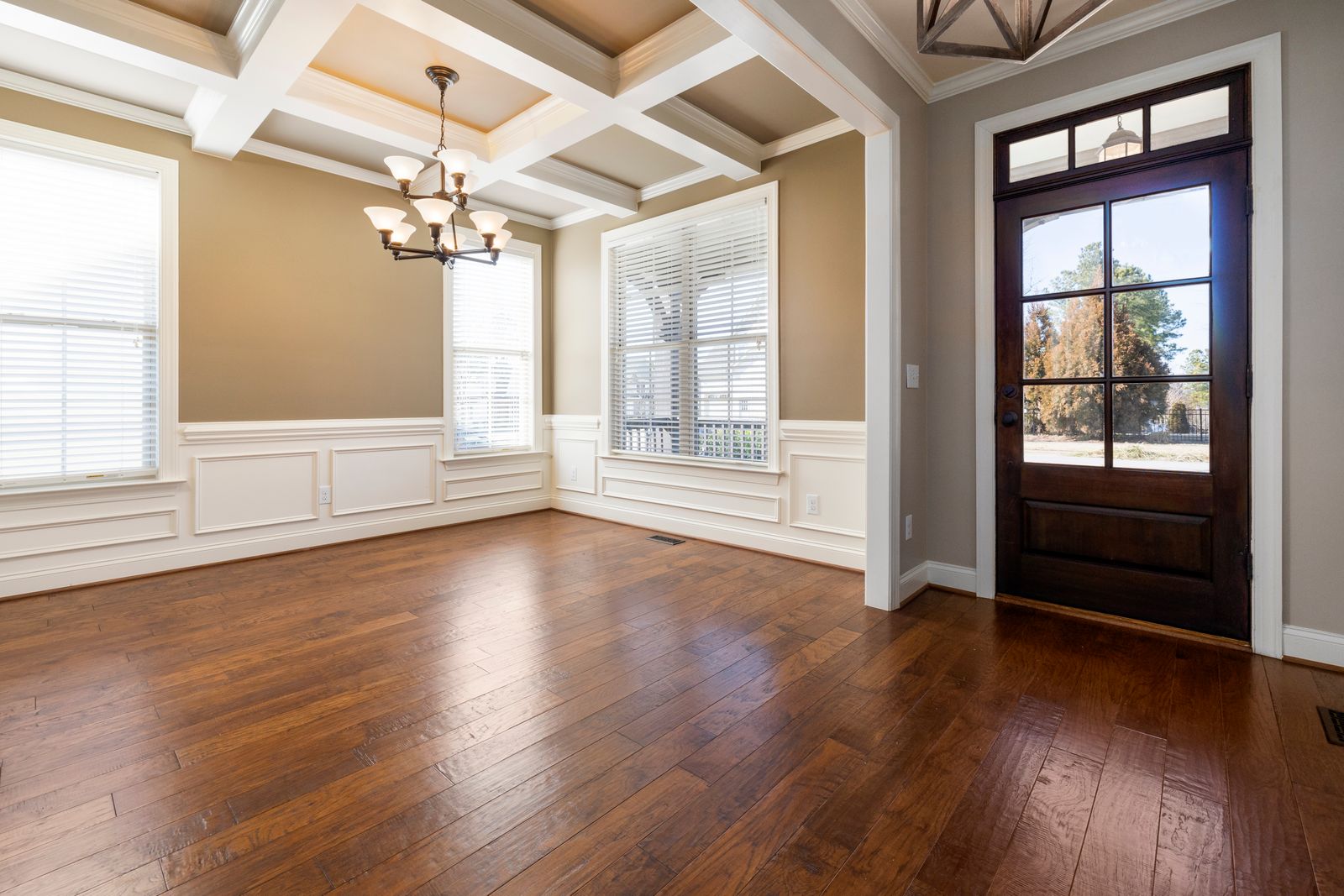
Short answer: repair isolated LVP damage only when the surrounding floor and subfloor are sound, the exact compatible product is available, and the repair method is approved for that floor. Replace an entire room when a clean transition produces a better result, and consider connected rooms or a repeatable unit-wide standard when several areas are worn or damaged. Never install over an unresolved moisture problem.
For an Atlanta rental owner, the cheapest-looking line item is not always the least disruptive choice. A three-plank repair in a high-traffic kitchen might involve disassembling many rows; replacing one bedroom may create a visible mismatch across an open hallway. The decision is about underlying condition, material compatibility, appearance and sequencing, not square footage alone.
Decision flow · 01
Four gates before you approve an LVP repair
Work through these in order. If the first condition fails, pricing a finish-only fix is premature. This is a scoping aid, not a substitute for inspecting a particular floor.
Any active moisture or soft substrate?
Pause cosmetic replacement. Identify the source, document and dry or remediate the assembly before choosing flooring.
Stop and investigateIs the exact plank and locking profile available?
Compare manufacturer, collection, product code, thickness, width, color, batch and installation method. A similar-looking plank is not necessarily compatible.
Verify compatibilityIs the damage isolated and the surrounding floor sound?
A removable plank may be a repair candidate. Widespread broken joints, uneven substrate or repeated movement point toward broader work.
Set repair boundariesWhat will the repaired floor look and function like?
Review visibility, thresholds, doorway transitions, adjacent rooms, tenant scheduling and the need for a consistent future replacement standard.
Choose the scopeA manufacturer’s installation guide decides how a particular plank may be repaired or installed. For example, Shaw Floors’ vinyl installation guidance emphasizes subfloor preparation, product-specific instructions, expansion allowances and appropriate transitions. Do not assume every click-lock, loose-lay or glue-down product uses identical techniques.
Moisture changes the job. EPA guidance calls for checking and drying underflooring after water damage. Active leaks, sewage, significant mold concerns or concealed deterioration may require restoration or licensed trade specialists before floor installation. See the EPA water-damage guidance.


Scope comparison · 02
Which scope makes sense for a rental?
The table below shows the tradeoffs to discuss in an estimate. There is no universal rule that spot repair is always cheaper or that a full-unit replacement always increases value.
01Replace selected planks
02Replace one room
03Replace connected rooms
04Standardize across units
There is a middle ground between matching every room and changing every unit: finish a vacant unit with one compatible product, preserve adequate extra boxes labeled by SKU and batch, and document the approved alternative if that product is discontinued. A long-term property standard is a procurement strategy, not permission to ignore each room’s substrate and installation requirements.
What to measure before requesting a quote
Measure each room separately and sketch the relationship between openings, hallways and floor-height changes. Square footage helps, but alone it misses what can make an installation complicated: long open sightlines, baseboards, doors that need clearance, steps, thresholds, fixed cabinets and appliances.
Property manager’s photo-and-measure checklist
- One wide shot of every room plus close-ups of lifted edges, gaps, wear or soft spots.
- Room dimensions and a simple doorway-to-doorway sketch; distinguish floor area from cabinet footprints.
- Plank back-label, carton, manufacturer, color and product code where available.
- All transitions: hallways, bathrooms, stairs, exterior doors and changes of floor height.
- Baseboard and shoe-molding condition; include trim removal and repaint needs in the scope.
- Signs of prior leaks, moisture, movement, uneven areas and repairs beneath the surface.
- Vacancy date, approved work hours, furniture/appliance moves, elevator or stair access and debris removal.
Ask the installer to state which subfloor preparation is included, what discoveries trigger a change order and which test or product requirement applies. For concrete, wood subfloors, underlayment and adhesives, the correct method and acceptance thresholds depend on the selected flooring system; do not use one internet moisture number for every product.
For a broader overview of what a floor installation can include, read our Atlanta flooring installation service guide. If drywall or trim also needs work after a turnover, our drywall and painting page explains that part of the scope.
Sequence flooring around a vacant unit
In a rental turnover, sequencing is a real cost driver even when no price is quoted. Photograph existing damage and finishes before demolition. Investigate leaks and substrate problems first. Confirm product availability and lead time before removing usable surfaces. Then coordinate removal, subfloor prep, installation, thresholds and trim, followed by cleaning and a documented walkthrough.
- Pre-work: document existing conditions, utilities, occupied areas and protection needed for appliances or built-ins.
- Discovery: assess the substrate after removal; confirm written approval for unexpected repairs before covering them.
- Installation: follow the exact product’s climate, expansion, adhesive and underlayment instructions.
- Closeout: photograph transitions and finish details, record the product code and keep care guidance for the next tenant.
If the unit is occupied, discuss noise, dust, access restrictions, furniture protection and a safe route through the space. Avoid planning a “one-day job” until the subfloor and material quantities are verified. In a multi-unit portfolio across Atlanta, Decatur, Sandy Springs or Marietta, documenting the same information for every unit can make future requests clearer, even when each unit needs a different repair.
For a larger bundled repair list, our Marietta turnover checklist helps organize the whole unit. For walls and floors affected by a leak, start with the water-damage repair-versus-replace guide rather than treating the defect as cosmetic.
LVP flooring questions from rental owners
Can a contractor replace just one LVP plank?
Sometimes. The product must be compatible, and the installer needs a manufacturer-approved repair approach. Click-lock flooring can require removing connected rows from an accessible edge; a damaged board in the middle of a room is not automatically a simple swap.
Does waterproof LVP mean the subfloor can stay wet?
No. A water-resistant or waterproof plank claim does not mean moisture beneath it is harmless. Underlayment, wood or concrete substrate, adhesives and adjoining materials can still be affected. Identify and correct the cause before covering the area.
Will a new box of the same color perfectly match the old floor?
Not necessarily. Manufacturing batches, gloss changes, sunlight, cleaning wear and product revisions can make a replacement visible. Compare a real sample in the room, not only a web photo.
Should we install the same LVP in every rental property?
A consistent, documented specification can simplify procurement and turnover work, but it should fit each unit’s substrate, use, sound requirements and manufacturer instructions. Keep the precise product codes and approved alternatives in a property file.
What information makes a flooring quote more accurate?
Provide a room-by-room sketch with approximate dimensions; wide and close-up photos; flooring product details if known; affected transitions and baseboards; occupancy dates; parking and stairs; and whether moisture or subfloor problems have been observed. A site visit may still be needed to confirm concealed conditions.
This article is general planning information, not a moisture clearance, engineering opinion, product warranty, or code determination. Plumbing leaks, hazardous materials, extensive contamination, structural concerns and regulated electrical or HVAC work require appropriately qualified professionals. Check the chosen flooring manufacturer’s installation instructions and the actual property conditions.