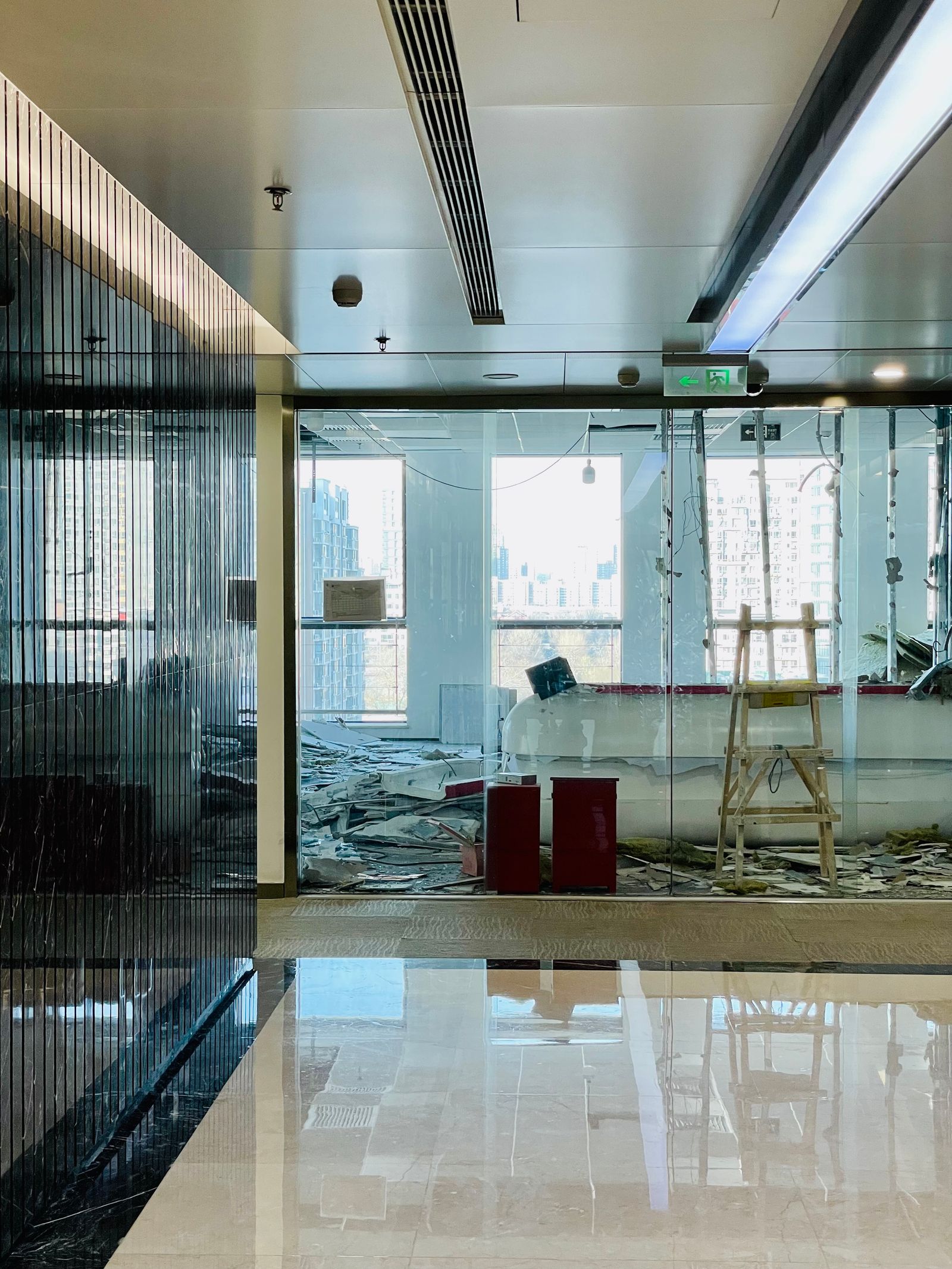
Short answer: create one location-based work order with a separate line for every repair, photographs and quantities, a priority level, a finish standard, site-access rules and written approval boundaries. Then ask the contractor to separate routine repairs from items that require specialist diagnosis or permits. That gives commercial property managers in Atlanta a much more usable starting point than “fix everything on the punch list.”
This is especially useful for multi-suite offices, retail stores, medical or professional buildings, warehouses and property portfolios around Atlanta, Decatur, Smyrna, Marietta and Sandy Springs. The aim is not to force every trade into one crew. It is to reduce repeated visits and administrative confusion while assigning the right person to each task.
The checklist below is for planning and procurement, not a formal building inspection, code determination or professional diagnosis. A facility's tenant rules, permits and critical systems can change the scope.
Before requesting bids, put each issue into the right lane
A facility punch list often mixes urgent building risks with paint touch-ups. Those items should not share one undifferentiated deadline or approval. Triage first, then build the estimate package.
Protect & escalate
Active leaks, suspected electrical hazards, obstructed exits, fire/life-safety equipment or structural concerns.
Diagnose & repair
Doors, flooring transitions, fixtures, drywall or equipment faults after the underlying issue is understood.
Finish & document
Painting, trim, cosmetic punch-list work, cleanup, closeout photos and tenant signoff.
Important: OSHA requires workplace exit routes to remain free and unobstructed. It also requires certain exit and safeguard systems to remain operational. Do not treat a malfunctioning exit door or blocked egress path as an ordinary cosmetic ticket. See OSHA's exit-route maintenance standard.
Likewise, determine why a ceiling or wall is damp before painting it. EPA guidance emphasizes promptly fixing the water source and drying wet materials; many materials can develop mold if they remain damp. Read the EPA moisture guidance. Suspected contamination or extensive damage warrants an appropriate specialist, not a routine patch.
For a rental property undergoing a turnover, our repair-or-replace guide for water-damaged walls and floors explains the documentation and material decisions to make before authorizing finish work.
The six fields every commercial repair request should include
Ask the site contact to document each issue once, in the same format. If your property has 11 damaged locations, number them 01–11 and reference those numbers in photographs and estimates. A simple labeled folder is better than an unstructured stream of text messages.
- 1
Location and access
Building name, suite, floor, exact room, after-hours rules, parking/loading instructions, escort needs and the person who can open doors.
- 2
Evidence and quantity
One wide view to identify the location, a close-up showing the defect, and a measurable quantity: square feet, linear feet, number of doors or number of patches.
- 3
Existing condition
Describe what is happening rather than guessing its cause: “ceiling tile stained below roof area” is better than “roof leak fixed by replacing tile.”
- 4
Requested finish
State whether the work ends at safe temporary protection, a functional repair, paint-ready patch or complete repaint, and who matches existing materials.
- 5
Occupancy and staging
Identify business hours, noise restrictions, tenant operations, protected merchandise, dust control, security and whether the space can be closed.
- 6
Approval boundaries
Name who authorizes the work, which items must be priced separately, and what discovery requires a written change order before proceeding.


Three examples: vague requests versus quote-ready descriptions
The examples below are fictional planning illustrations—not actual Atlanta Handyman Company jobs or cost estimates. Their purpose is to show the level of detail that leads to a better contractor conversation.
Repair drywall throughout office
Suite 204, west corridor: four damaged drywall areas, approximate dimensions per photo. Include patching, finish matching, primer, paint and protecting adjacent flooring; verify whether full-wall repaint is needed.
Fix all doors
Main rear service door sticks when closing; record latch, hinge, closer and frame symptoms with photos. Keep access safe. Do not modify fire-rated or controlled-egress hardware without appropriate specialist review.
Replace flooring
Two raised plank edges near breakroom entrance; identify product and transition condition, photograph surrounding floor and assess underlying moisture before deciding on local repair versus a larger replacement.
Use a defined endpoint for each line item. For drywall and paint, specify texture and paint coverage. For flooring, state whether the contractor is matching an existing product or pricing a replacement area. For doors and hardware, identify whether the door has special fire, security or access-control requirements.
How to sequence repairs without shutting down the building
Start with the constraints, not a contractor's preferred order. Confirm when rooms can be closed, how deliveries enter, and which operations cannot be interrupted. Protect adjacent surfaces before demolition or patching; complete dusty work before final paint and cleaning.
Plan zones
Approve access windows, notices, protected pathways and qualified trades.
Resolve causes
Assess active leaks, electrical or mechanical faults before finish work.
Repair & finish
Complete approved work by zone; coordinate noisy and dusty activities.
Close out
Record photos, test function, clean each zone and list remaining items.
Keep open routes usable throughout the project. A temporary barrier must not create an unsafe evacuation route. Coordinate any restrictions with building management and qualified life-safety personnel, rather than improvising around an occupied building's emergency systems.
What should be separate from a bundled handyman work order?
Bundling is about fewer handoffs, not bypassing licensing or specialty work. Separate diagnosis, authorizations and completion criteria for electrical circuits and panels, regulated plumbing, HVAC refrigerant or gas systems, structural changes, fire-rated doors, alarms, sprinklers and work affecting accessibility or egress. Determine permit and licensed-trade requirements with the applicable local authority and qualified professional.
For a multi-location retail or professional-services client, consider standardizing a simple category list across locations: active damage, operational repair, finish improvement and capital project. This gives management a consistent view of what can be approved promptly and what needs separate design, engineering or specialist pricing. For store-specific access and scheduling decisions, see our guide to phasing a retail refresh around business hours.
A short, copyable work-order structure
Site and access window • Item ID and room • Issue observed • Photo reference • Quantity and dimensions • Requested repair/finish • Trade or safety escalation • Schedule constraints • Price, exclusions and approval contact.
Commercial work-order FAQs
Can we send one work order for drywall, paint, flooring and door adjustments?
Yes, one consolidated scope can make coordination easier. Keep separate line items, sequencing and trade qualifications clear. Some electrical, HVAC, plumbing, fire-door, life-safety or structural work must be handled by appropriately qualified specialists.
Should a facility manager ask for a quote from photos or request a site survey?
Photos with dimensions, material information and an access window often support preliminary pricing. Persistent leaks, inaccessible areas, complex code-related work and concealed damage can require a site survey or specialty assessment. Confirm any assessment fee before scheduling.
What is the quickest way to reduce change orders?
Make quantities, finish standards, access assumptions, debris removal, exclusions and unknowns visible before approval. Require a written price and scope for concealed conditions before expanding the work.
Do we need to close the whole business for repairs?
Not always. Ask the provider to propose zones, barriers, work hours, noise and cleanup stages. Occupied sites still need safe access and unobstructed emergency routes throughout the project.
How do we prioritize a ceiling stain, sticking exit door and wall scuffs?
Investigate active moisture and any potential exit-route problem first. OSHA requires workplace exit routes to remain unobstructed; cosmetic wall repairs come after the safety and underlying damage questions are resolved.
This article provides a general procurement checklist for Metro Atlanta facilities. It is not safety, legal, building-code or licensed-trade advice. Site conditions, leases, regulations, permit requirements and job-specific qualifications control the actual work.
Atlanta Handyman Company
Have several repairs across one commercial property?
Send us one consolidated list with photos, locations, quantities and your completion window. We can discuss the appropriate next step for property maintenance, general repairs, walls, doors, floors and coordinated improvement work in Metro Atlanta.
For residential vacancies, see our rental turnover checklist, or browse all repair planning articles.